
ILIZIJA 00 — DREAM
When Alignment Becomes a Warning
A storm can strengthen by straightening, while science advances by refusing to smooth away disagreement. Coordination is an amplifier; consequence decides whether it heals or harms.































OBSERVATION AT THRESHOLD · DREAM · SEE · CONFRONT · INTIMATE
Reduce noise. Reveal signal.
A storm can strengthen by straightening, while science advances by refusing to smooth away disagreement. Coordination is an amplifier; consequence decides whether it heals or harms.
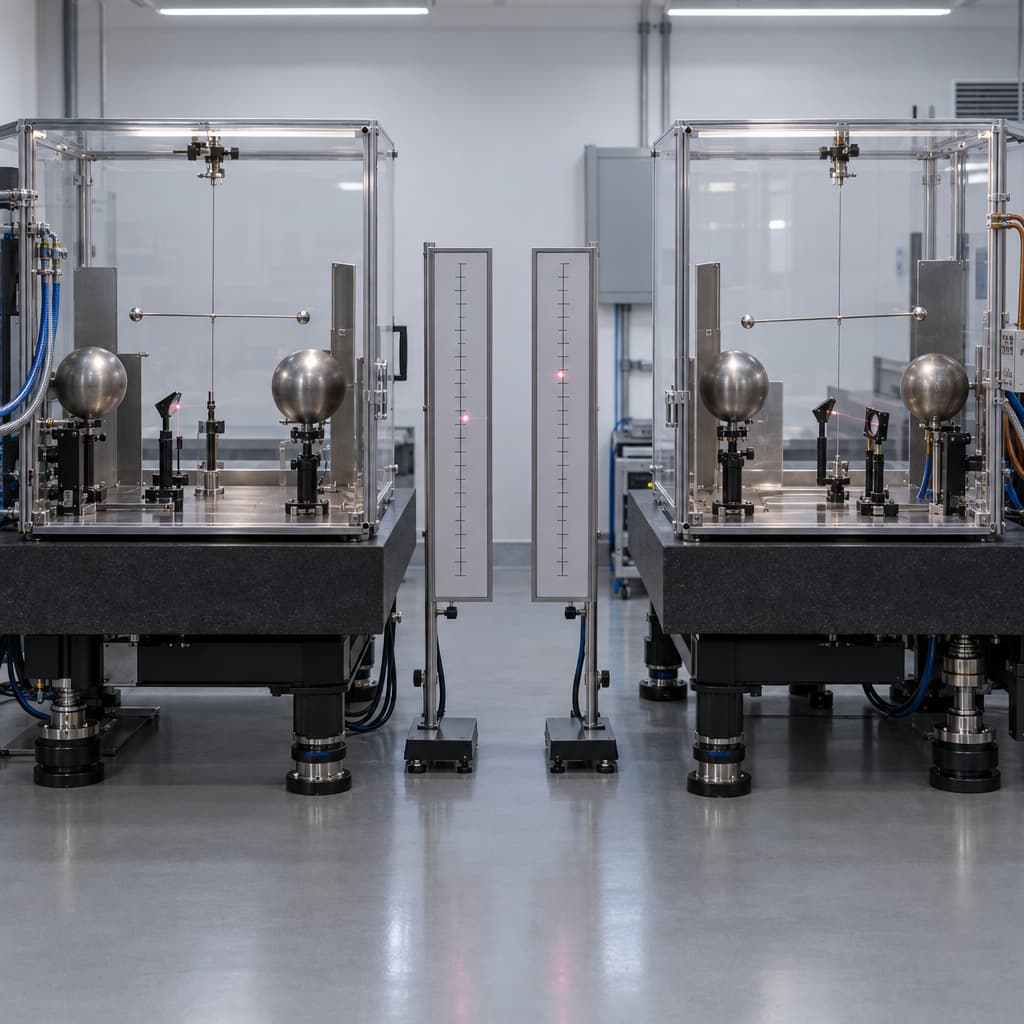
Gravity is everywhere, yet its strength remains unusually difficult to measure. The unresolved disagreement around G offers a disciplined way to meet conflict without forcing premature agreement.
Standardization can make a system legible while hiding common-mode fragility. In some complex networks, bounded variation improves stability—not because disorder is inherently good, but because identical parts can share
When a system takes away escape, it inherits responsibility for every vital flow the locked door interrupts: air, water, care, evidence, and appeal.
We assume vital resources and deep renewal must be imported from distant, exotic places. Planetary science reveals Earth held its own water from the beginning, forged in the local heat where it was built.
When alarm systems convert internal breakage into an external war, true sanctuary is found not by fortifying the walls, but by tending quiet, repeatable daily acts of restoration.
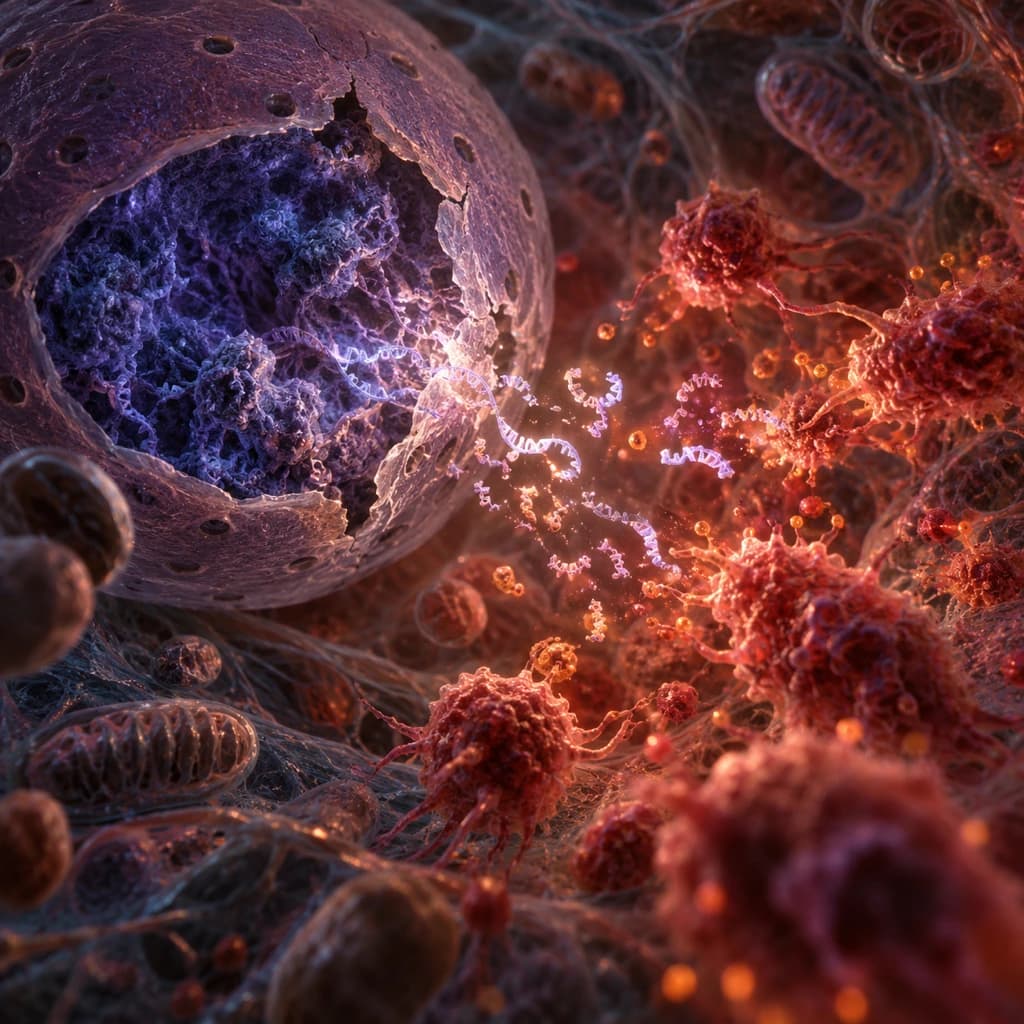
When broken fragments of self leak into the wrong chamber, the body mistaking internal strain for an external invasion mounts an exhaustive defense against its own healing.
When institutions validate public dread while positioning themselves as its only safe custodians, fear is converted from a warning signal into a regulatory moat.
We erect monuments to freeze our presence in stone, yet twenty-five millennia of human ritual survived in thin layers of ash and gathered grass. Memory is preserved not by weight, but by repetition.
For nearly a century, textbooks taught that molecular charge reached four steps deep. Reality stops at the first boundary, exposing how we miscalculate the reach of our models.
When distant certainty dissolves and deep structures leak, what keeps us grounded is not grand consensus, but the local line held without pretense.
When central structures recede and deep volume fades, life is maintained not by grand narratives, but by the short-range connections just beneath the surface.
When formal institutions project unanimous certainty, private consensus often dissolves into open, unacknowledged questions.
When internal scaffolding unspools and external alarms become engines of acceleration, holding space requires a quiet, non-negotiable geometry.
When the unseen architecture that holds our inner history begins to unspool, remembering becomes a quiet work of structural care rather than raw will.
When institutions convert internal structural warnings into managed publicity, safety measures become mere shock absorbers for continuous acceleration.
Chronic damage occurs not when a system fails to defend itself, but when it lacks the internal mechanism to turn off its own alarm.
When global networks contract into darkness, survival is sustained by quiet, self-contained hearths that keep heat alive across the cold.
Extending biological life offers no comfort if the physical currency of presence—memory, endurance, and warmth—is already spent on survival.
Centralized supply networks maximize throughput by consuming structural redundancy, turning single regional disruptions into immediate global shocks.
Survival during sudden systemic collapse is rarely won by scale or force, but by quiet structural adaptations that preserve core vital functions.
When we treat isolated symptoms—a fading bone, a private algorithm, or an exhausted body—we miss the unified baseline that holds the entire structure together.
We treat care and presence as pure choices of will, ignoring how physical depletion silently limits what one body can offer to another.
When corporate labs become sole arbiters of dual-use capabilities, public safety is transformed into a proprietary subscription feature and an internal compliance exercise.
We treat bone decay and muscle weakness as separate betrayals of age. Yet a single molecular switch governs both, proving that structural strength relies on one integrated baseline.
Every complex structure—a nervous system, a trade corridor, an autonomous life—draws its baseline from an unacknowledged reservoir. When the source is depleted, the surface pays the tax.
The physical resources and silent metabolic choices passed down before memory begins shape the inner landscape long after childhood ends.
When global trade treats ocean corridors as neutral pipelines, regional instability transforms vulnerable chokepoints into zones of structural extraction.
When an intervention designed for metabolic control reduces airway crisis by forty percent, it exposes the artificial boundaries of single-metric models.
When systems trade local buffers for friction-free speed, they convert quiet internal reserves into invisible risk, leaving no margin when distant chokepoints break.
Sustaining the living environment for others often turns quiet devotion into an invisible routine, where fatigue settles into the body unnoticed.
When global trade relies on distant stability to keep supply chains thin, regional disruption transforms narrow ocean routes into immediate systemic bottlenecks.
The structure that survives toxicity carries its own neutralizing architecture long before an external cure arrives.
When surface activity pauses, subterranean layers recombine, exposing ancient tracks beneath dried peat and buried stone.
Evening is not merely the end of labor; it is the space where the mind releases what was never meant to be carried into the dark.
When systems burn beneath the surface, treating visible flames as the start of crisis hides the structural drying that makes catastrophe inevitable.

What feels like a sudden steep incline upon waking is often just the durable structure of experience offering a new grip for the day.